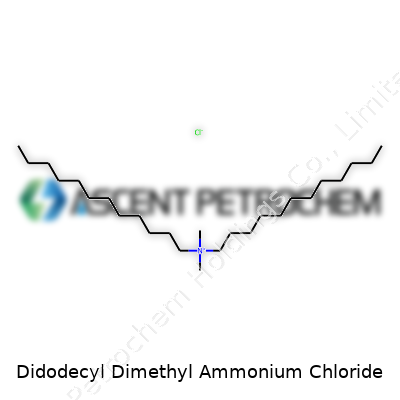
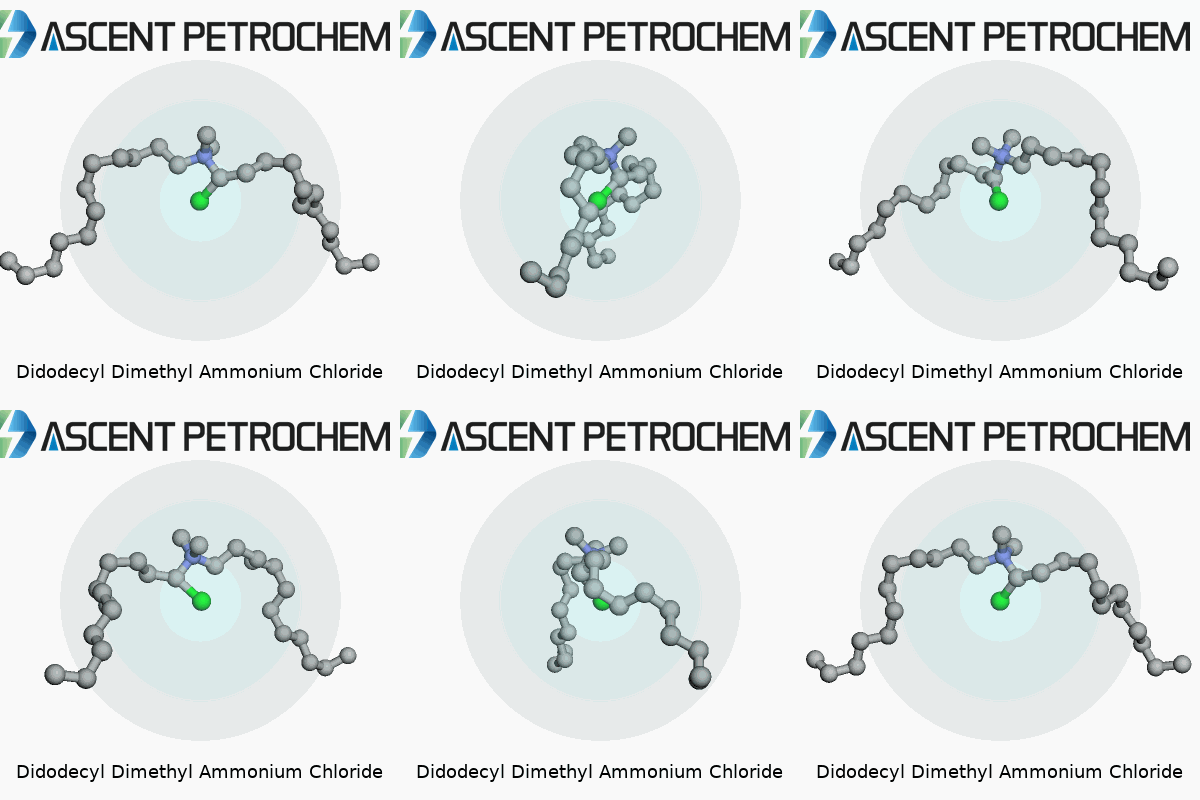
Didodecyl dimethyl ammonium chloride (DDDMAC) didn’t appear by accident. The path took shape in the twentieth century, born out of a tension between public health needs and the chemical industry’s drive for powerful yet reliable disinfectants. By the 1940s, scientists realized that quaternary ammonium compounds offered strong antimicrobial action, and soon discovered that tweaks to the hydrocarbon chains could supercharge effectiveness without making surfaces unsafe for touch. DDDMAC—built with two long dodecyl arms—resulted from the chase for broader, longer-lasting activity. Market momentum wasn’t just about killing more germs: public awareness of diseases like polio and tuberculosis forced health workers to find weapons that handled heavy loads of organic material, sticky residues, and tough bacteria. To this point, DDDMAC’s structure didn’t just offer better cleaning; it shaped how sanitation protocols developed in hospitals and food preparation, influencing the modern standard for surface decontamination. This simple molecule helped push the conversation far beyond bleach or soap.
Sitting on the market as a high-performance disinfectant and anti-microbial, DDDMAC finds its way into more than hospital wipes and cleaning sprays. Suppliers ship it as clear to yellow liquids, or sometimes in waxy solid form, sold at high concentrations for dilution on-site. Its technical catalogs, built for procurement and lab safety, show tight quality controls, especially over amine content, chain-length distribution, and residual free alkyl chlorides. Chemical suppliers compete on these details, knowing institutional buyers look for clarity and consistency—any deviation, and hospital or food plant contracts can vaporize. The balance in product design here gets tricky. On one side, you need killing power. On the other, it can skyrocket costs or make equipment harder to rinse. DDDMAC’s product lifecycle reveals decision-making closer to coffee-shop economics than sweeping chemistry: buyers call for fast kill times under messy conditions (blood, food residue) and want safe handling for heavily trafficked settings.
Structure shapes performance with DDDMAC. The two dodecyl chains lift the molecule’s hydrophobic potential, letting it wedge into microbial membranes and wreak havoc. Its white waxy or thick oily nature makes it easy for formulators to blend into both water-based and solvent preparations. Solubility remains high in organic solvents, middle-tier in water. DDDMAC doesn’t oxidize quickly—this gives it longer shelf life than chlorine-based compounds. Heat won’t break it down fast, but light and air can cause yellowing over time. Reactivity with anionic detergents sits high, something that practical users must track: mixing DDDMAC with soaps or other surfactants can cause loss of action. This killer-versus-clutter seesaw means janitorial and healthcare professionals rely on labeled mixtures and avoid cross-mixing without good reason. It’s a tough but critical balance during rushed cleanups and daily disinfections.
Suppliers offer DDDMAC with purity ranges above ninety-five percent for medical and food settings, with specifications publicly posted for transparency. Label requirements in Europe, Asia, and North America run tight. Ingredient declaration covers active content per weight, lot numbers, recommended dilution (often between one part per thousand and one part per hundred, depending on the application), precautionary phrases, and chemical hazard pictograms. Some producers show exact CAS numbers and even supply chain transparency. My own experience growing up around a hospital lab showed how much users value those clear data sheets—busy staff don’t want a mystery, they want clear directions and warnings. Labels, in this business, are law: regulators and buyers will reject poorly labeled drums outright, and insurance doesn’t cover mishaps if the bottle skips a warning about eye or lung irritation.
Manufacturing DDDMAC isn’t a secret, but turning out a pure, stable product at scale takes heavy industrial support. Production usually starts with dodecyl chloride, which reacts with dimethylamine. Then, the intermediate ammonium compound reacts with methyl chloride or another alkylating agent under reflux, locked in with careful pH control and a quench stage to neutralize byproducts. Industrial reactors grind through these steps with monitoring for clean conversion, traced by analytical chromatography. Waste products and unreacted amines must be handled under tight emissions controls, given the risks during handling and disposal. No plant manager wants local authorities dumping a cleanup order on their site, so most major manufacturers invest in effluent treatment gear and run internal audits on every batch.
DDDMAC holds steady under most conditions but faces decomposition if beaten by strong acids or bases, especially at high temperatures. Alkyl swapping—the replacement or extension of hydrocarbon chains—can shift both efficacy and toxicity within the series of quaternary ammonium compounds, so chemical engineers keep a log of performance versus exposure risk for every experiment. DDDMAC doesn’t generally serve as a building block for larger molecules; it trades almost exclusively on its ready-to-use antimicrobial clout. Still, tweaks on the molecule’s structure gave rise to entire product lines for different germs, material compatibilities, or environmental standards over decades.
Catalogs list DDDMAC under a laundry list of names—didodecyldimethylammonium chloride, didecyldimethylammonium chloride (often used interchangeably), DDAC, and even specific product brandings like Bardac 222 or quaternary ammonium C-12 compound. The proliferation of names serves both confusion and clarity, depending on the job. In global procurement, the precise chemical ID matters more than a friendly brand name, as buyers can amass dozens of similar labels in one purchase cycle. My time helping audit lab purchases revealed the confusion that comes from mixing technical and trade names, and how crucial clear, universally recognized naming proves for compliance and worker safety.
Safety with DDDMAC doesn’t rest with a locked cabinet or signed logbook. Health hazards include skin and eye irritation, and inhaled mist can sting airways. Long shifts spent cleaning with concentrated or poorly diluted product lead to occupational dermatitis and respiratory troubles—rules for handwashing, gloves, and splash goggles don’t come from paranoid overreach, but from repeated clinical experience and case reports. Major agencies—including EPA in the US and ECHA in Europe—set ceilings for workplace exposure, spell out emergency response for spills, and provide best practices for storage and disposal. Improper mixing, especially with soaps or oxidizers, creates sticky gels or dangerous fumes that sideline workers or force site evacuations. Training, documented audits, and clear signage make up the backbone of safer use.
Hospital infection control, food plant sanitation, marine vessel maintenance, and even consumer disinfectants pull DDDMAC into their operations every week. In medicine, it shows up in hard-surface sprays and instrument wipes where bacteria and fungi collect fast. Food producers—think dairies, meat packing, and vegetable processors—favor DDDMAC for biofilm breakdown and day-to-day line cleaning. Its resistance to organic load means kitchens or busy floors can hit tougher targets without reapplication after every visible spill. Even childcare centers and athletic facilities, both hotspots for viral outbreaks, look for products built with this quaternary ammonium. My firsthand experience with a relative recovering from post-surgery infection shows the need for top-end disinfectants; a missed spot or weaker substitute can ripple to emergency hospitalizations or long-term health setbacks for whole wards.
Innovation doesn’t pause in the cleaning industry. Despite DDDMAC’s long record, academic labs and private firms still hunt for tweaks improving bacterial kill rates, reducing environmental persistence, or slashing skin toxicity. Nanotechnology gets paired with DDDMAC to target problem surfaces—think high-touch, irregular tools and recirculating water pipes. Scientific journals carry comparisons between DDDMAC and new contenders or eco-friendlier blends to see if classic solutions stay competitive. Researchers remain skeptical of hype, demanding controlled data and head-to-head tests. They also track how bacteria adapt or tolerate repeated disinfectant use, so resistance doesn’t undo decades of infection control.
Risk hasn’t gone away with years of use. Toxicologists continue to log DDDMAC’s effect on skin, lungs, and aquatic life. While low concentrations work as safe surface cleaners, spills or accidents can harm fish, invertebrates, and sensitive plant life downstream. Bioaccumulation doesn’t rank as high as some older biocides, but regulators won’t ignore residuals that drift into water systems or build up in processing runoff. Animal studies help dial in exposure limits and guide the wording of Safety Data Sheets, which don’t sugarcoat the risk for chronic exposure or misuse by untrained staff. Tighter rules in urban and agricultural areas reflect rising concern over chemical runoff and public health.
Looking ahead, the gameboard isn’t static. Population growth, climate change, and emerging pathogens will crank up demand for durable, fast-acting disinfectants. At the same time, green chemistry requests keep climbing, as both government mandates and consumer activism push for formulas that leave less trace in water and soil. Manufacturers investing in better delivery systems—think wipes that meter the dose or gels that limit airborne spray—may help bridge the gap between trusted chemistry and new regulatory demands. Open data on resistance, environmental persistence, and user injuries will help professionals make sharper decisions in product selection, policy setting, and even emergency planning. Some startups and environmental groups call for total phase-out within decades, but the current infrastructure and need for robust hygiene mean DDDMAC’s story isn’t fading out soon. Ultimately, conversation among frontline workers, scientists, policy setters, and regular people keeps evolving around the balance between disease control and better stewardship of our shared spaces.
Didodecyl dimethyl ammonium chloride often shows up in cleaning conversations, but most people don’t know what it actually is or why companies keep using it. This chemical, part of the quaternary ammonium compounds family, gets a lot of attention in the world of disinfectants and surface cleaners. You probably won’t see it by name on your everyday products at home, but in hospitals, food processing, and heavy industry, it pops up regularly. Its job is simple: destroy bacteria, viruses, and fungi with strong, fast action.
In places with a higher risk of spreading germs, speed and effectiveness count for everything. Hospitals lean on compounds like this one to help prevent the spread of infections through rooms and surfaces. Kitchens in restaurants and cafeteria settings use it to guard against common germs that can trigger foodborne illness. For companies that manufacture food or pharmaceuticals, any gap in cleaning can spell disaster, both financially and for public health.
Workers often rely on cleaning agents that function quickly and thoroughly. The appeal of didodecyl dimethyl ammonium chloride comes from its ability to break down biological messes—think bacteria, viruses, spores—without leaving behind a strong residue. It’s been shown to knock out pathogens like E. coli and Staphylococcus. That makes it a favorite where hygiene demands run high.
Nothing comes without drawbacks. Compounds like this one raise questions about what ends up in our waterways after cleaning solutions hit the drains. Research suggests some of these chemicals don’t break down easily and can harm aquatic life. Handling it in industrial settings also means strict safety protocols—direct contact can irritate the skin or eyes, and inhalation isn’t great, either. I’ve seen places where improper use led to health complaints among cleaning staff, so training and good equipment really matter.
Some people worry about resistance, too. Using strong antimicrobials on surfaces over and over risks breeding tough bacteria that don’t respond to usual chemicals. It’s a conversation happening in many hospitals, and it’s led to closer scrutiny on when and how these products are used.
Change begins with information. Many companies now test alternative disinfectants or use a rotation of different compounds so germs don’t get too comfortable. Advances in product formulation can lower the concentration required for results, which reduces both health and environmental risks. People within organizations—cleaners, supervisors, safety officers—benefit from open training about safe handling and smart dosing of these products.
Regulatory groups and scientists continue to keep their eyes on field data for these chemicals. By paying attention to what gets washed down the sink and making rules around concentrations, industries help limit the environmental load. In my own experience, the culture inside any company makes a difference. Open questions, shared best practices, and honest talks about health and safety push everyone forward.
As the science grows, so do the options for businesses and organizations aiming for safety and sustainability. That said, didodecyl dimethyl ammonium chloride remains one of the trusted tools on the cleaning cart, valued for its punch and reliability—so long as it’s used with care and an eye on the bigger picture.
People want disinfection, especially after a pandemic shook everyone’s confidence in everyday surfaces. One ingredient that keeps popping up in wipes and sprays is didodecyl dimethyl ammonium chloride (often called DDAC). It's a quaternary ammonium compound—so it's part of a family best known for killing germs by punching holes in microbial cell walls. Sounds effective, right? But there’s more to the story.
Manufacturers count on DDAC because it handles bacteria, some viruses, and even fungi. Hospitals, food processing plants, and homes all benefit from this kind of broad action. According to research from the U.S. Environmental Protection Agency (EPA), disinfectants with "quats" like DDAC help control pathogens. This chemical doesn't offer much scent and it breaks down grime.
People touch surfaces and then rub eyes or eat with their hands. Most government guidelines say these products pose minimal risk with proper use. The National Institutes of Health and Health Canada both support this, but there’s a catch. DDAC can be irritating. Skin contact may cause dryness, redness, or even more severe allergic reactions in sensitive groups. Eyes do not fare well if they get splashed. Long-term exposure adds more concern. A 2021 clinical study connected some quats, including DDAC, to modest changes in fertility markers and hormone function for workers exposed at high levels.
Most folks use DDAC on counters and doorknobs, not by the bucketful every day. Still, that reassurance comes with a caveat. It loses meaning if instructions go ignored. The average kitchen user rarely wears gloves or lets the surface dry before touching it or prepping food. The label tells you to rinse food contact surfaces after using DDAC products, but how many of us actually do?
Pets sit closer to the floor, lick paws, and lie belly-down where these chemicals get sprayed or wiped. Evidence about quats in general points to a higher risk for animals with smaller body mass. Veterinary case reports confirm that cats and dogs ended up with drooling, vomiting, or burns in their mouth after exposure to quats, especially if they chew on wipes or touch just-cleaned spots. Birds and reptiles seem even more sensitive.
The American Veterinary Medical Association offers a simple warning: keep animals away during cleaning and never let them lick or chew recently cleaned areas. Rinsing and allowing surfaces to dry thoroughly lowers the chances of accidental ingestion or skin contact.
People trust their cleaning supplies to keep families and pets healthy, but they rarely look closer at the chemical details. The science says DDAC works as a disinfectant, but its risks add up when exposure goes up or directions fall by the wayside. Safer cleaning habits help: Use gloves, rinse surfaces, ventilate while cleaning, and never allow pets on wet areas. For living spaces, soap and water will handle most dirty jobs. Reserving tougher chemicals like DDAC for high-risk situations, such as stomach flu outbreaks or messes involving raw meat, just makes sense.
Newer, plant-based cleaners offer antibacterial action without the baggage of potential hormone disruption or risk to pets. Checking labels and choosing products with clear instructions helps, but nothing beats informed choices and common sense. If it's hard to pronounce and you couldn’t eat off the surface without rinsing, consider alternatives—especially if little hands or furry paws roam the floors.
Didodecyl Dimethyl Ammonium Chloride plays a big part in cleaning products, disinfectants, and sometimes even personal care. Stores and factories rely on its ability to fight germs. With something so useful, we cannot afford to be careless. Leaving chemicals like this lying around can put workers, families, and even the environment in danger. After years visiting industrial supply rooms and working with safety trainers, I’ve seen that accidents with harsh chemicals often begin with simple mistakes—an unlabeled drum, a leaky lid, or a container stored too close to a heat source.
This compound comes with real safety concerns. It can harm skin and eyes, and its fumes can sting lungs. In liquid form, spills get slippery and spread quickly. Even more concerning—this chemical disrupts aquatic life if it ever reaches streams or rivers. Public health depends on making sure such leaks don’t happen. Poor storage practices only make accidents more likely, and every spill sends a message that safety comes second. I remember seeing a whole shipment lost because one drum was left open in a humid storeroom. After that, everyone pushed for clear labeling and annual safety refreshers.
Safe storage starts with one clear guideline: keep the chemical in its original, tightly-sealed container. Factories and labs often use high-density plastic drums or pails, sometimes lined. These shield against leaks and spills, and manufacturers add bright labels so even a new employee knows what’s inside. Workers stack these containers on pallets, not directly on the floor, away from sunlight, heat, and moisture. Storing drums in a cool, dry area with plenty of air movement keeps the contents from breaking down or reacting.
No one ever stores Didodecyl Dimethyl Ammonium Chloride next to acids, oxidizers, or food. A mistake here can cause dangerous fumes or even fire. From experience, having a separate, marked area for chemicals—preferably a locked one—keeps out anyone who shouldn’t be handling them. Spills get managed with absorbent barriers, and staff stay ready with goggles, gloves, and quick access to showers or wash stations. Every warehouse should post emergency numbers and material safety data sheets in easy reach.
Some companies still cut corners. Drums get reused, or labels fall off. Safety training slips. These shortcuts don’t just risk fines—they can cost lives. It’s important for supervisors to schedule regular checks and encourage workers to speak up about missing labels or mystery leaks. After all, people notice the small problems long before the big ones hit.
Electronic tracking makes a difference too. Barcodes or digital logs reduce the risk of losing track of old stock or mixing up containers. Many businesses with good safety records use checklists that everyone on shift can read and update. This keeps storage safe and makes sure Didodecyl Dimethyl Ammonium Chloride only leaves the storeroom when needed, for the right task, in the right hands.
No one gets perfect overnight, but with clear rules, good habits, and the right equipment, mistakes become rare. In the end, safer storage protects workers, users, and communities—all while keeping valuable products right where they belong.
Didodecyl dimethyl ammonium chloride turns up everywhere these days, from hospitals and kitchens to industrial plants. As a disinfectant, people trust it to eliminate bacteria, viruses, and fungi. Accuracy in mixing isn’t just a matter of saving money or following a label. The right ratio determines how safe and effective the solution remains. Too strong, and you’ll risk skin irritation, damage to surfaces, or chemical residues. Too weak, and germs might hang around, causing even tougher problems down the road.
Let’s talk numbers. The Centers for Disease Control and Prevention (CDC) suggest a dilution of 0.08% to 0.3% for routine surface disinfection with quaternary ammonium compounds like this one. To break that down: if you pick up a concentrate that is 50%, you typically add around 16 milliliters of concentrate to one gallon of water for light cleaning and everyday contact surfaces. Heavy-duty jobs — think clinics or food processing plants — demand a slightly higher range, closer to 32 milliliters per gallon. Some manufacturers echo these ratios on product labels, though exact instructions sometimes shift based on target microbes and contact time.
Years working in a veterinary setting taught me how an extra splash here or there might seem harmless, but staff or animals can pay the price. Triple-checking dilution meant peace of mind for everyone involved. Disinfectants get the spotlight during infection outbreaks; mistakes slip through when routines get busy or new team members join. Clear dilution charts in waiting areas helped us avoid confusion and accidents, a small but genuine way to boost safety for staff and patients alike.
Misjudging the ratio wastes money and creates legal risks. Over time, repeated overuse corrodes metal and weakens plastics. Disinfectant shortages in past years forced some facilities to stretch supplies, leading to guesswork. That gamble cost some real losses — in workplace health and in lost trust from clients.
The Environmental Protection Agency (EPA) has registered hundreds of products using Didodecyl dimethyl ammonium chloride, each required to list directions for use. The Food and Drug Administration (FDA) limits this ingredient to 0.1% or lower in direct food applications. Mismatched guidance from different sources confuses new users, especially those outside specialized fields.
A few practices can help make dilution safer and easier to understand. Always pre-mix in a well-ventilated spot. Post simple charts at sinks or mixing stations. Routinely train everyone, not just the custodian who mixes gallons each day but the shift worker filling a spray bottle on a tight deadline. Purchasing closed-system dispensers helps avoid spills and ensures precision — worth the investment where many people share responsibility for cleaning.
Too many chemical injuries happen because someone skips written instructions. Fading markers on buckets and unlabelled spray bottles invite mistakes. Using clear bottles and fresh markers turns out to be a cheap and effective fix. At home, measuring cups set aside for chemicals and stored away from food prep areas make a big difference. No matter the setting, care in mixing doesn’t slow down the process — it lets everyone rely on the results.
Walk into almost any industrial supply room or large-scale cleaning closet, and you’ll spot unfamiliar names on the label. Didodecyl dimethyl ammonium chloride usually flies under the radar. Most folks trust the safety of whatever cleans up the mess, but trust sometimes leaves us looking the other way. This chemical sits among quaternary ammonium compounds, often known as “quats.” These ingredients serve as muscle in disinfectants, fabric softeners, and some specialty coatings.
After several years working in an institutional setting, I’ve seen the type of quick cleanup routines that leave gloves off and masks in the drawer. It takes only a few busy weeks for redness to show up on your skin, maybe an itchy patch or breathing that feels a bit rougher at the end of a shift. Not everyone will connect those symptoms to what’s in the mop bucket, but a look at workplace studies proves the link. Direct skin contact with didodecyl dimethyl ammonium chloride carries a risk of irritation—sometimes enough to trigger blistering for folks with a history of eczema or allergies. Inhalation of sprays or mist has caused coughing and headaches among cleaning staff. One 2021 workplace survey reported that repeated contact led to dermatitis and mild asthma-like symptoms in some workers exposed daily.
It’s not just about skin and lungs: the stubborn foaming action that makes quats so powerful also stops some good bacteria in waterways from doing their job. Companies have dumped thousands of gallons of diluted disinfectants into wastewater. Unique properties keep these compounds hanging around in rivers and lakes, and early research shows that aquatic organisms, especially small invertebrates, can lose coordination or even die after exposure. Fish eggs prove much more sensitive than you think. Regulatory bodies in North America have started tracking the environmental brake this chemical puts on biological water processes. Papers from the last decade warn of potential for bioaccumulation and slow breakdown outside controlled systems.
Children learn the rules about not touching “the blue stuff” early for good reason. At low concentrations, risk to most healthy adults stays small if instructions get strict follow-through. The catch comes with repeated use and a lack of ventilation. Danger doesn’t just sit with hospital janitors—a poorly labeled home disinfectant raised the risk for my neighbor’s asthmatic child. Doctors documented a spike in accidental poisonings as people started disinfecting surfaces more than ever during the pandemic of 2020. Chronic, accidental skin contact with concentrated product led to burns and, in rare cases, hospitalization.
Labels rarely spell out the real risk in plain English. Product training shouldn’t just cover how and where but stress glove and eye protection every single time. Proper ventilation cuts risk—opening two windows did more to clear up my own headaches than any fancy respirator. Switching to lower-risk alternatives like hydrogen peroxide works well for routine cleaning, though high-load hospital use might still need heavy chemicals. Wastewater treatment plants lag behind in catching these stubborn compounds, so it makes sense to minimize what ends up down the drain. Regular review of cleaning protocols makes it easier to swap in safer options or dilute safely.
Hazards crop up not from chemicals alone, but from the everyday shortcuts people take. If chemical companies, employers, and buyers take an honest look at what sits under the sink, prevention gets simpler. Safe use rides on honesty about risk, good habits, and practical backup plans. Communities do best when they look out for each other, holding both sellers and users accountable for the hidden costs behind a sparkling floor.